Home Solar Installations in Germany: Now Up to 800 W of Allowed Generation
Which installations does the new regulation apply to?
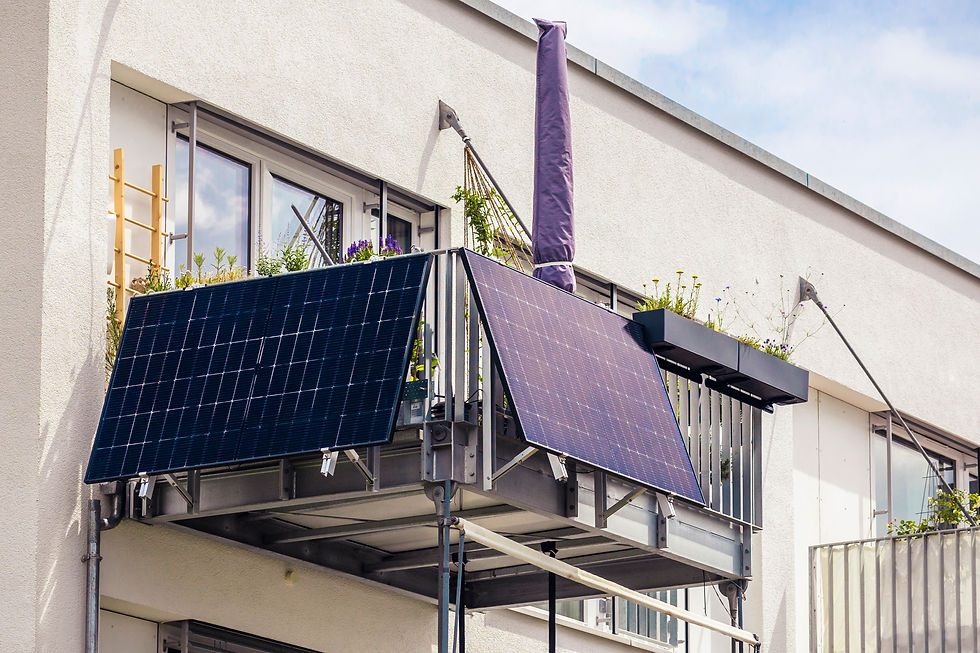
A “balcony solar installation”—or Balkonkraftwerk, as it is known in German—is a small solar setup of up to 2000 W that has grown significantly in popularity in recent years. Thanks to its easy handling and compact size, even people who do not own their homes can install these mini solar systems. They can be mounted on balcony railings, building façades, terraces, or rooftops.
Balcony solar systems generally consist of one or two solar modules and an inverter. The inverter converts the solar energy generated into standard household electricity, meaning it transforms direct current (DC) into alternating current (AC).
How much solar electricity can be generated?
Installing a photovoltaic system on a balcony can save between 10% and 20% of annual electricity costs, according to experts—provided it is properly oriented. Since mid-May 2024, it is permitted to inject up to 800 W into the public grid. The total installed photovoltaic capacity of all modules can be up to 2000 W.
For balcony solar systems capable of generating more than 800 W, the inverters limit the amount of electricity injected into the grid. Devices connected in the home use solar energy first before drawing electricity from the utility provider.
The previous injection limit of 600 W was increased by the federal government through a new reform package (Solarpaket I), which came into effect mostly on May 16, 2024. The goal is to increase electricity production from balconies and simplify the commissioning of these devices.
A Global Trend Toward Solar Generation in Public Grids
This change in German regulations reflects a growing global trend: allowing more solar energy generated in homes and small installations to enter the public grid. Despite the technical challenges—such as grid stability and managing excess production during high-generation periods—governments are adopting policies that incentivize renewable energy use.
This trend demonstrates a worldwide commitment to the transition toward more sustainable energy, while consumers seek ways to reduce energy costs and dependence on fossil fuels.
Want to learn more about the technical challenges of injecting solar energy into the public grid?
Stay tuned for our upcoming publications!
Source: ADAC. More on this topic in the original ADAC article.


Comments